




Trimethyl borate flux is a liquid vapor flux used in a flux generator and carried to the torch with the fuel gas. It is intended for flame brazing, with a characteristic green flame, and is described in the catalog as a no-pickling flux that helps avoid glassy residues and oxidation. Confirm generator settings and cleaning results on a trial part.
Trimethyl borate flux is a liquid, flame-applied vapor flux. Instead of brushing a paste or sprinkling a powder on every joint, the flux is added to a flux generator, vaporized, and mixed with the fuel gas that feeds the torch. The catalog also lists this product family as a no-pickling (non-acid-cleaning) flux and as Vapogas flux.
Where a catalog grade, diameter, packing or process window is not listed on this page, it can be manufactured or selected to order. Please contact XINRUI and request the current datasheet for the grade you will trial.
How vapor flux works
In conventional powder or paste flux practice, glassy crystals and oxidation can form after brazing, so the workpiece often needs pickling. A vapor flux is intended to reduce that post-braze cleaning. The advantages listed for this pickle-free flux in the existing catalog are:
- It will not produce glass crystals.
- It is intended to avoid oxidation after brazing in the heated zone.
- Used as a liquid flux with metered delivery, it can support consistent dosing and high joint quality without pickling, when the process is set correctly.
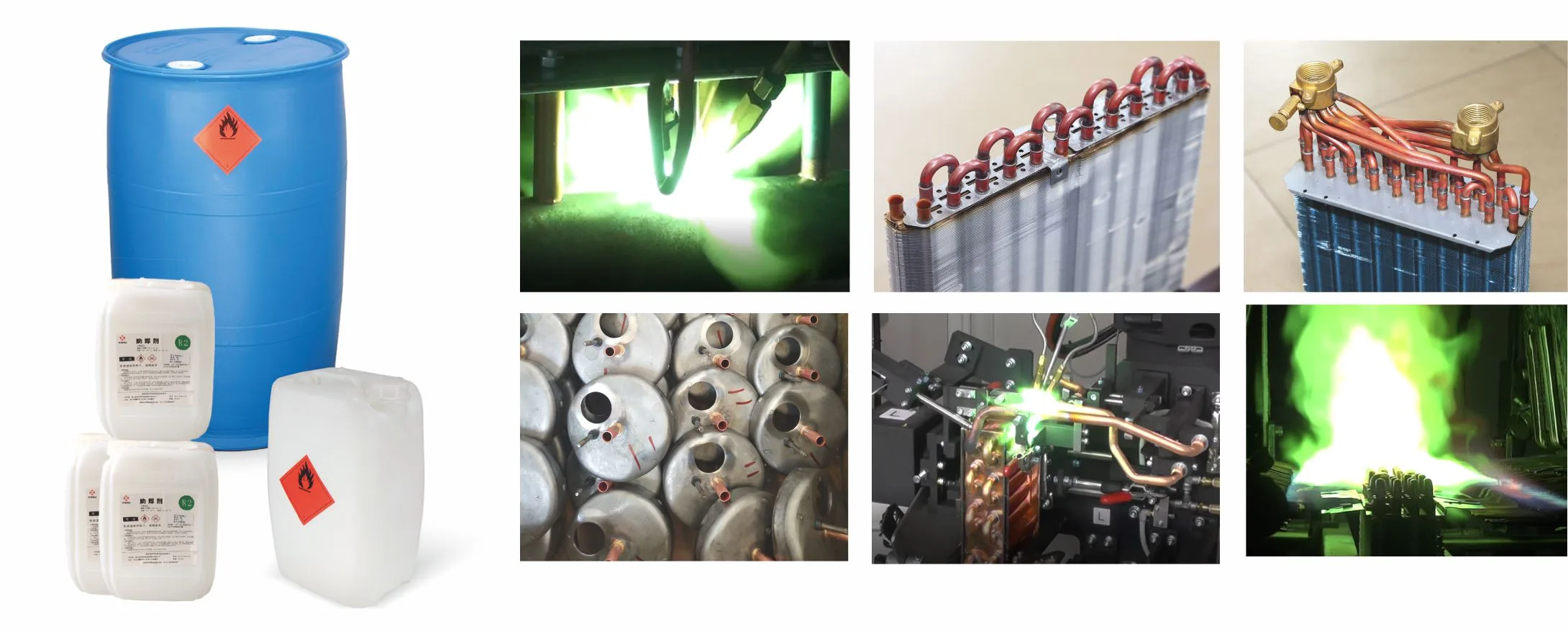
Vapogas flux is added to the flux generator and mixed, as vapor, with the gas flowing into the generator (acetylene, liquefied gas, propane, or another gas specified for the unit). When the flux-bearing gas reaches the torch, the flame typically shows a bright green color. Covering the joint with that flame is intended to improve wettability and fluidity of the filler metal, reduce pinholes, and improve joint strength. Because the metal surface in the brazing area is protected from oxidation, acid pickling can often be avoided, which can raise production efficiency and lower cleaning cost.
Standards and where this flux fits
Brazing fluxes are classified in AWS A5.31/A5.31M. Trimethyl borate (methyl borate) vapor fluxes are a known industrial method for flame brazing of copper and copper-alloy assemblies; they are not a drop-in replacement for every paste or powder flux, and they are not an aluminum halide or fluoroaluminate furnace flux. If your work is aluminum flame brazing, see the FB2 halide aluminum flux or fluoroaluminate flux pages instead.
Base metals and process notes
This flux is used in flame brazing. It is commonly discussed for copper and brass assemblies in HVAC, refrigeration and general tube work, together with a matching copper or silver filler metal. Exact base-metal limits, generator settings and gas mixing ratios should come from the current datasheet and from trials on your parts. Do not copy settings from a different brand of generator.
Forms and equipment
The product is supplied as a liquid flux for use in a flux generator. Packaging volume and generator pairing can be confirmed at inquiry. Related equipment on this site includes the flux generator and its heaters and hoses.
Catalog content retained below
The images below are the existing catalog photographs and tables, including the available-flux table and Vapogas flux data. Read the values on the images and confirm them on a current datasheet.
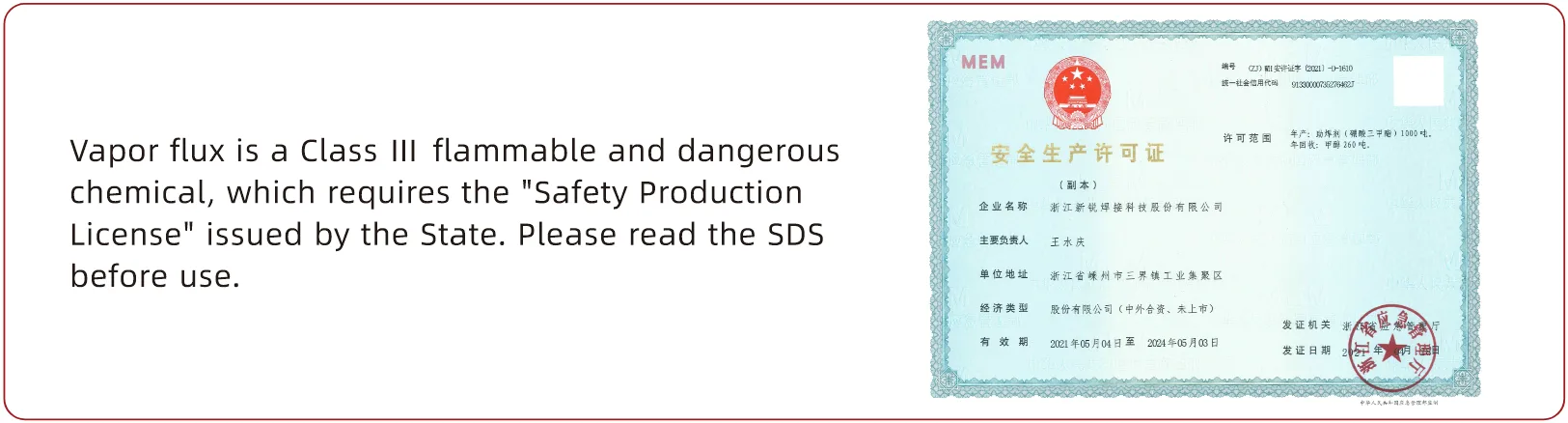
1. No-pickling (non-acid-cleaning) flux
Using conventional brazing powder or brazing paste, glassy crystals and oxidation will be easily produced after brazing. Therefore, the workpiece usually needs pickling after brazing. Advantages of pickle-free flux:
- Will not produce glass crystals
- No oxidation after brazing
- Using liquid flux, standard quantification and no pickling, high brazing quality can be achieved when the process is set correctly
Available fluxes
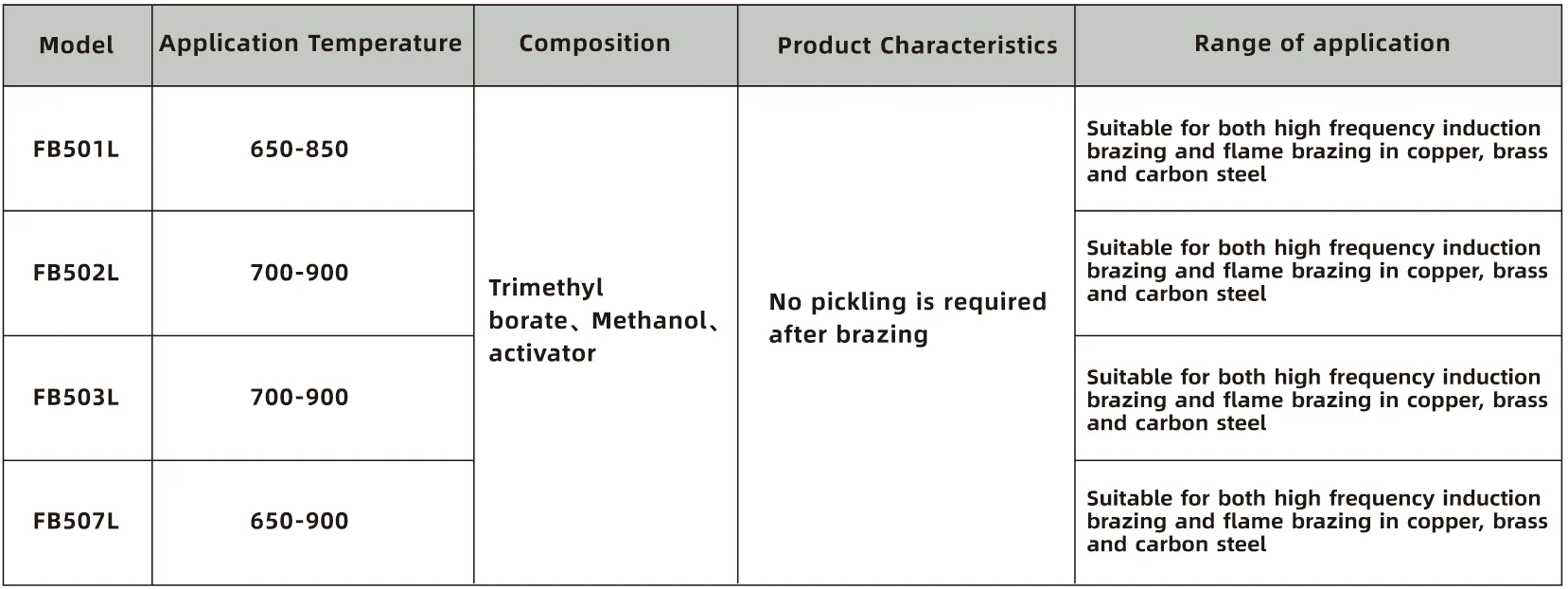

2. Vapogas flux
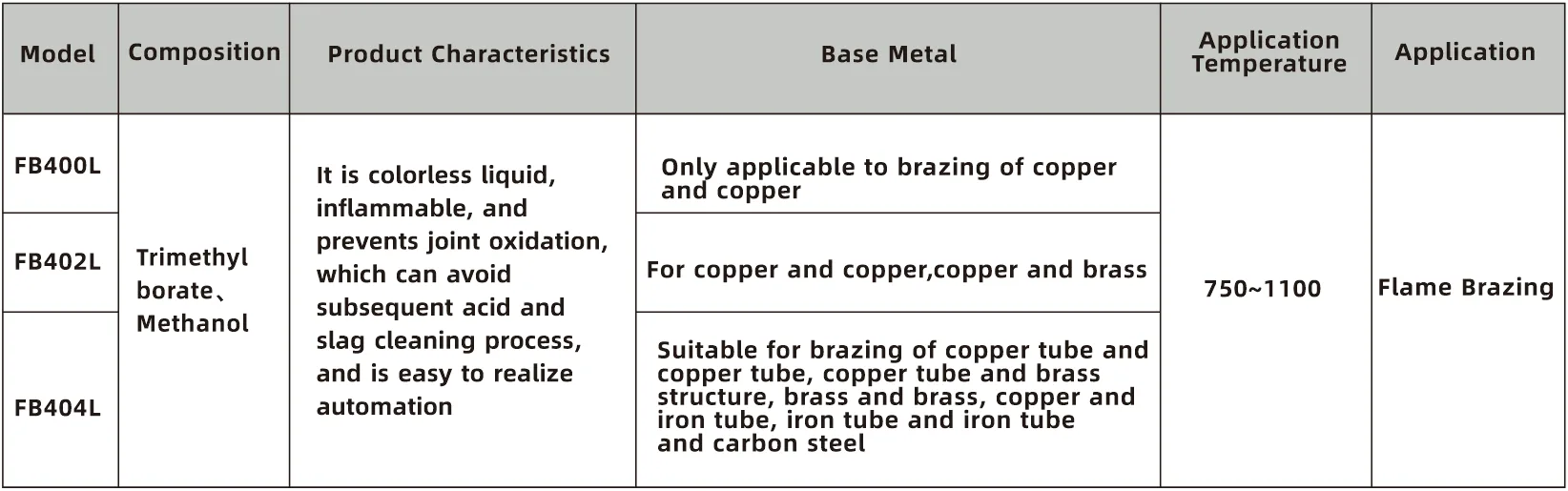
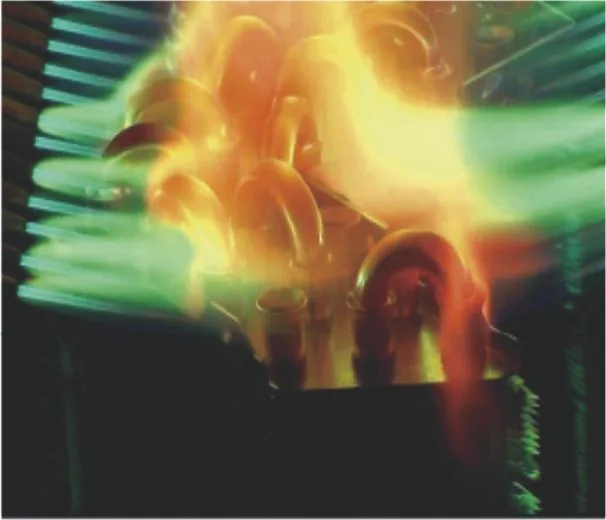
Vapogas flux is a flame-applied brazing flux. The gas flux is added to a flux generator and mixed with the gas (acetylene, liquefied gas, propane, or another specified gas) flowing into the generator, in the form of vapor. When the flux-bearing gas passes through the pipeline to the torch, it will emit a bright green flame when burning. By covering the brazing parts, the flame can improve the wettability and fluidity of the filler metal, reduce the generation of pinholes and improve the brazed joint strength. There is no oxidation on the metal surface of the brazing area, so acid pickling can be avoided after brazing, which can improve production efficiency and reduce cost.
Frequently asked questions
What is trimethyl borate flux used for?
It is used as a vapor, or gas, flux in flame brazing. The liquid is metered in a flux generator, mixed with the fuel gas, and carried to the torch so the flame itself delivers flux to the joint.
Will I still need to pickle the parts after brazing?
The point of this flux type, as described in the catalog, is to avoid glassy residues and surface oxidation that would otherwise need acid cleaning. Joint design, gas settings and the base metals still have to be correct. Confirm the cleaning result on a trial part.
What equipment do I need?
You need a compatible flux generator and torch arrangement, plus the correct fuel gas (acetylene, propane or another gas listed for the generator). See the flux generator page and ask for a process recommendation.