



Sooner or later a brazing shop outgrows the hand torch. The joints are the same every day, the orders keep coming, and one operator with a torch cannot keep up — or the joint quality starts to drift from one part to the next. That is when buyers start looking at automatic flame brazing machines, and the first fork in the road is always the same: a rotary table, or a conveyor line. Both automate the same job. Both are built to the customer’s requirements — every machine in XINRUI’s equipment range carries the same line, “customizable as per customer requirements”. And the wrong choice is expensive in the quiet way: a machine that takes up floor space it never earns back, a line that spends more time being changed over than brazing, a table that cannot take the part it was bought for. The question is not which machine is better. It is which one fits your parts, your volume, and the way your shop actually works.
What a rotary brazing machine does
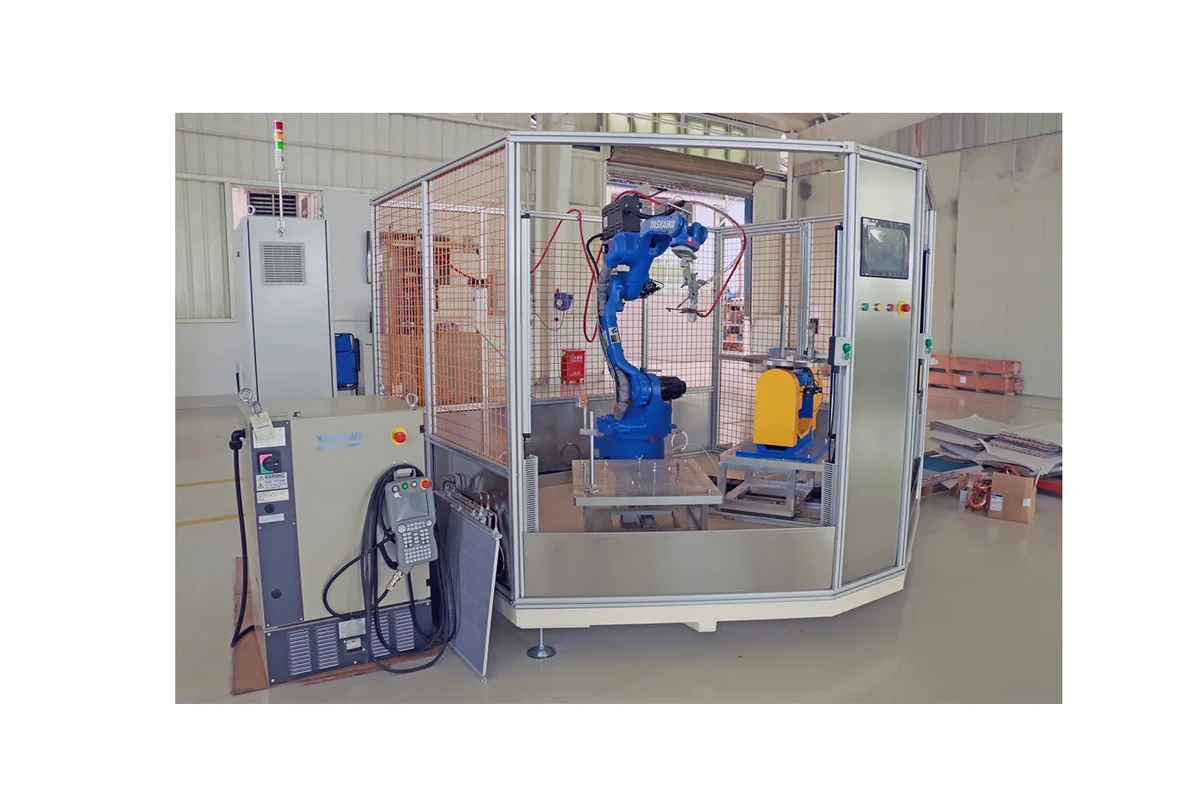
A rotary machine works in a circle. The parts sit in fixtures around a rotating table, and the table indexes — turns one step at a time — from station to station. One station loads the part, another preheats it, another brazes it, another lets it cool, and the finished part comes off where the next one goes on. While one part is under the torch, the operator is already loading the next one, so the machine is rarely standing still waiting for hands. That is the shape of the work it suits: repeat parts, several joints on the same part, joints that need to be presented to the flame at the same angle every time, and a shop where one operator runs the machine. XINRUI lists four models, Rotary Brazing Equipment 1 through 4, and the number of stations, the fixtures and the torch layout are part of the custom build — they are sized from the part, not picked from a shelf. A rotary machine takes up a compact footprint for what it does, which is one reason small and medium shops start here: it replaces a bench, not a production line.
What a conveyor brazing machine does
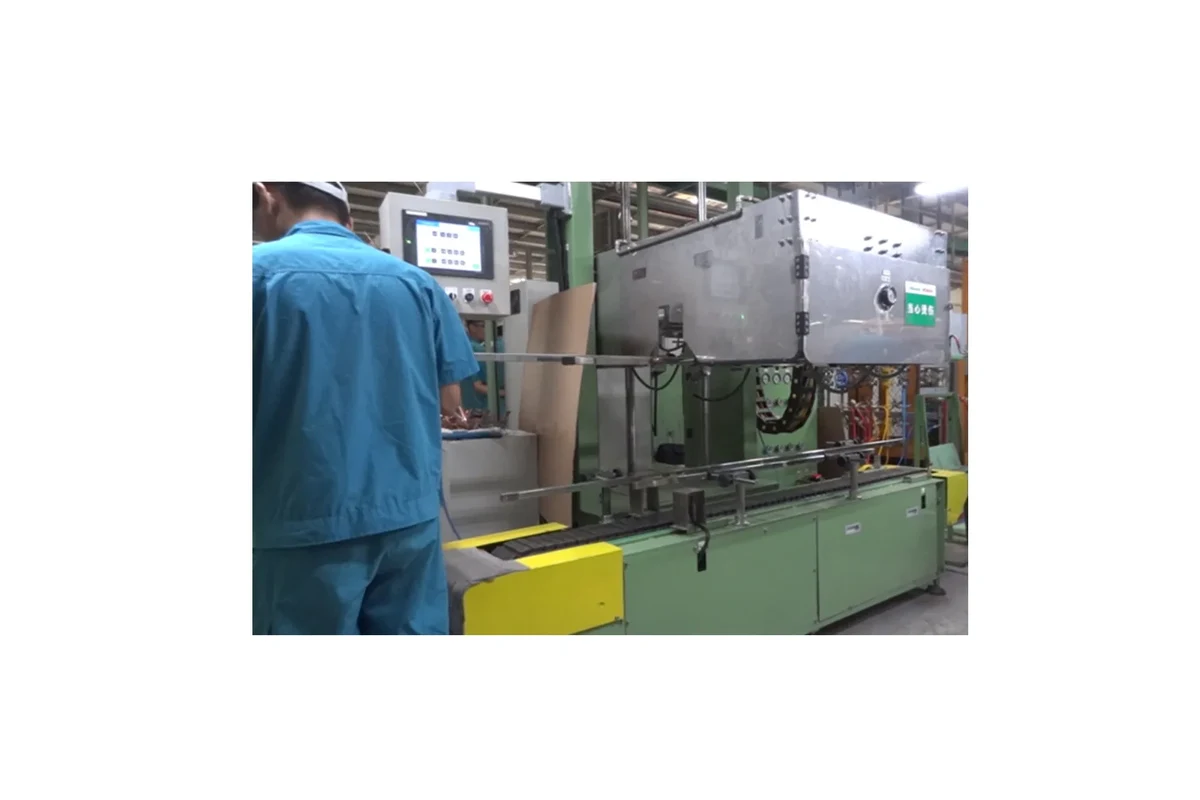
A conveyor machine works in a straight line. The parts travel on a belt or a chain through heating zones, are brazed as they pass through, and come out the other end. Load at one end, collect at the other, and the parts keep moving. That is the shape of the work it suits: long runs of the same part, where the same joint is brazed the same way hundreds or thousands of times, and where the brazing step sits in the middle of a line — fed from an upstream process and handed on to the next one. XINRUI lists four models, Conveyor Type Brazing Machine 1 through 4, again built to the customer’s requirements. The trade-off is floor space: a line is long, and it wants a straight run. A shop that buys a conveyor machine is buying a line, not a bench, and it should have the length of floor to show for it before the machine arrives.
The comparison: five questions, not a spec sheet
No catalog page for either machine lists a throughput number, and this article will not invent one. A parts-per-hour figure means nothing without the part, the number of joints on it, and the heating time the joint actually needs. What a buyer can do — and what the factory needs to hear — is answer five questions honestly, and the answers point at one machine or the other.
First, how many parts per shift, and how steady is that number? A conveyor line earns its keep on steady, high volume of the same part. A rotary table earns its keep on repeat work that comes in batches. If the volume swings from week to week, say so — a machine sized for a peak that never comes is money standing still.
Second, how many different parts? Both machines can be built for more than one part, but changeover is the cost. On a rotary table, changeover usually means changing fixtures; on a conveyor line, it usually means re-setting the line. Count the part variants and how often the machine has to change over, and tell the factory — that number decides more than the machine’s size does.
Third, how big is the part, and how many joints does it carry? A small fitting with two joints and a heat exchanger core with dozens of joints are different machines. Large parts need room to travel or to turn, and every extra joint is extra heating time at the brazing station. Send the part dimensions and the joint positions, not just the part name.
Fourth, how much floor space do you actually have? A rotary machine is compact. A conveyor line is long. Measure the floor before you ask for a quote, and remember the machine needs room around it for loading, unloading and maintenance — not just its own footprint.
Fifth, who runs it, and what else do they do? A rotary machine is usually one operator loading and unloading. A conveyor line usually feeds from one process and out to another, so it needs the line around it to be ready. The machine that fits is the one the shop can staff every shift, not the one that looks best on paper.
When neither a rotary nor a conveyor machine is the answer
Not every shop needs either. Small batches, trial runs and new parts that are still changing belong on a simpler machine: XINRUI’s Single-station Brazing Machine 1 and 2, and the Double-station Brazing Machine, are built for exactly that — one or two stations, one operator, no line to fill. If the parts are many and varied, the joints are complex, and the volume per part is low, the answer may be a Robot Brazing Machine instead: the robot moves the torch and the part stays put, so changing parts is a matter of changing the program and the fixture rather than rebuilding a line. And for all-aluminum heat exchangers in volume, there is a machine built for that one job — the Full-aluminum Station Continuous Brazing Machine. The point is the same in every case: start from the part and the volume, and the machine follows. Our guide to heat exchangers covers the parts these machines are most often bought for — plate, tube and fin, all-aluminum, flat and dimensionally stable.
The machine is only half the system — the filler and flux have to match
A machine heats the joint. The filler metal and the flux make the joint, and they have to suit the way the machine heats it. For aluminum work, the usual pair is an aluminum-silicon filler metal — 4047, about 11–13% silicon, AWS BAlSi-4 / ISO Al 112 — with a fluoroaluminate flux, or a flux-cored wire that carries the flux inside the wire so the operator does not have to apply it by hand. The accessories in XINRUI’s brazing tool range exist for exactly this: a digital wire feeder feeds filler at a steady rate, and a flux generator supplies vapor flux into the flame. None of that is a detail to sort out after the machine arrives. Trial the filler and the flux on the machine, on your own parts, before the machine is signed off — a joint that brazes well by hand can behave differently when the heating time is set by a table or a belt. XINRUI offers free samples, trial brazing, training and on-site support, with 24/7 technical support, and the company behind the machines is certified to IATF 16949, ISO 9001, ISO 14001 and ISO 45001, with RoHS-compliant full-process management. Our guide on how to choose a brazing materials factory covers the wider questions to ask any brazing supplier before a first order.
What to tell the factory before you ask for a machine
XINRUI builds its machines to the customer’s requirements, so the quote you get is only as good as the information you send. Before you ask for a machine, put this together — it is the same list the factory will ask for, and sending it first saves a round of questions:
- A part drawing, with the joint positions marked. The machine is built around the joints, so the drawing is the starting point, not an attachment.
- Part size and weight, and joints per part. Size decides the table or the belt; joints per part decide the heating time.
- Volume per shift and per month — and how much it varies. Say what a normal week looks like, not just the best week.
- How many part variants, and how often you change over. This is what separates a rotary table from a conveyor line more than anything else.
- Shifts, floor space, and what happens upstream and downstream. A machine that has to wait for parts, or that has nowhere to put finished parts, is a machine standing still.
- Heating method, and the filler and flux already in use. If you already braze with a filler and flux that work, say so — the machine should be built around them, not the other way round.
FAQ for brazing line buyers
Is a rotary or a conveyor brazing machine faster?
Neither is faster in the abstract. A rotary machine suits repeat parts loaded by one operator, with the table indexing from station to station while the next part is loaded. A conveyor machine suits long runs of the same part moving through heating zones in a line. Which one is faster for you depends on the part size, the joints per part and the volume per shift — ask the factory to size the machine from your part drawing and volume, not from a catalog number.
Can one machine handle several different parts?
Both can be built for more than one part, but changeover is the cost. On a rotary table, changeover usually means changing fixtures; on a conveyor line, it usually means re-setting the line. Tell the factory how many part variants you run and how often you change over — that number decides more than the machine’s size does.
Which machine fits a large part, such as a heat exchanger?
A large part needs a machine built around its size — a conveyor line that carries it through the heating zones, or a rotary table large enough to carry it. Send the factory the part dimensions and the joint positions and let the machine be sized from the part, not from the part name.
Do I still need to choose filler and flux separately?
Yes. The machine heats the joint; the filler metal and the flux make the joint. For aluminum work the usual pair is 4047 aluminum-silicon filler metal (about 11–13% silicon, AWS BAlSi-4 / ISO Al 112) with a fluoroaluminate flux, or a flux-cored wire that carries the flux inside the wire. Trial the filler and flux on the machine, on your own parts, before the machine is signed off.
What should I send the factory to get a machine sized?
A part drawing with the joint positions marked, part size and weight, joints per part, volume per shift and per month and how much it varies, how many part variants and how often you change over, shifts, floor space, what happens upstream and downstream, the heating method, and the filler and flux already in use.
A rotary table and a conveyor line are both good machines, and both are the wrong machine for the wrong shop. The buyer who gets it right is rarely the one who picked the faster machine — it is the one who sent the factory the part drawing, the volume, and the honest answer about changeovers, and let the machine be built around those. If you send XINRUI the part, the joints and the volume, the factory can recommend a machine — rotary, conveyor, robot or single-station — and supply samples to trial on your own parts. See the Rotary Brazing Equipment and Conveyor Type Brazing Machine pages, or contact XINRUI to start the conversation.