



Walk past a flame brazing line and you will see a piece of equipment that does not look like it belongs to the brazing itself: a stainless tank on a blue frame, with hoses running to the torches. That is the flux generator, and it does a job most people assume is done by hand. Instead of an operator brushing paste or sprinkling powder on every joint, the generator puts the flux into the flame itself. The flux rides in with the fuel gas, reaches the joint through the torch flame, and every joint on the line gets the same dose. This guide explains what a flux generator actually does, how trimethyl borate flux works as a vapor flux, what the parts around the generator are for, and where vapor flux is the wrong choice.
How vapor flux works
The flux in this system is a liquid, not a paste or a powder. Trimethyl borate flux — listed in the catalog as a no-pickling flux and as Vapogas flux — is added to the flux generator, vaporized, and mixed as vapor with the fuel gas flowing into the generator: acetylene, liquefied gas, propane, or another gas specified for the unit. When the flux-bearing gas reaches the torch, the flame typically shows a bright green color. That green flame is the flux at work — covering the joint with it is intended to improve the wettability and fluidity of the filler metal, reduce pinholes, and improve joint strength. Because the metal surface in the brazing area is protected from oxidation, acid pickling can often be avoided, which can raise production efficiency and lower cleaning cost. Brazing fluxes are classified in AWS A5.31/A5.31M, and the point of this one is consistency: a liquid flux with metered delivery supports the same dosing on every joint, which is exactly what hand-applied paste cannot promise on a production line.
What is inside the system
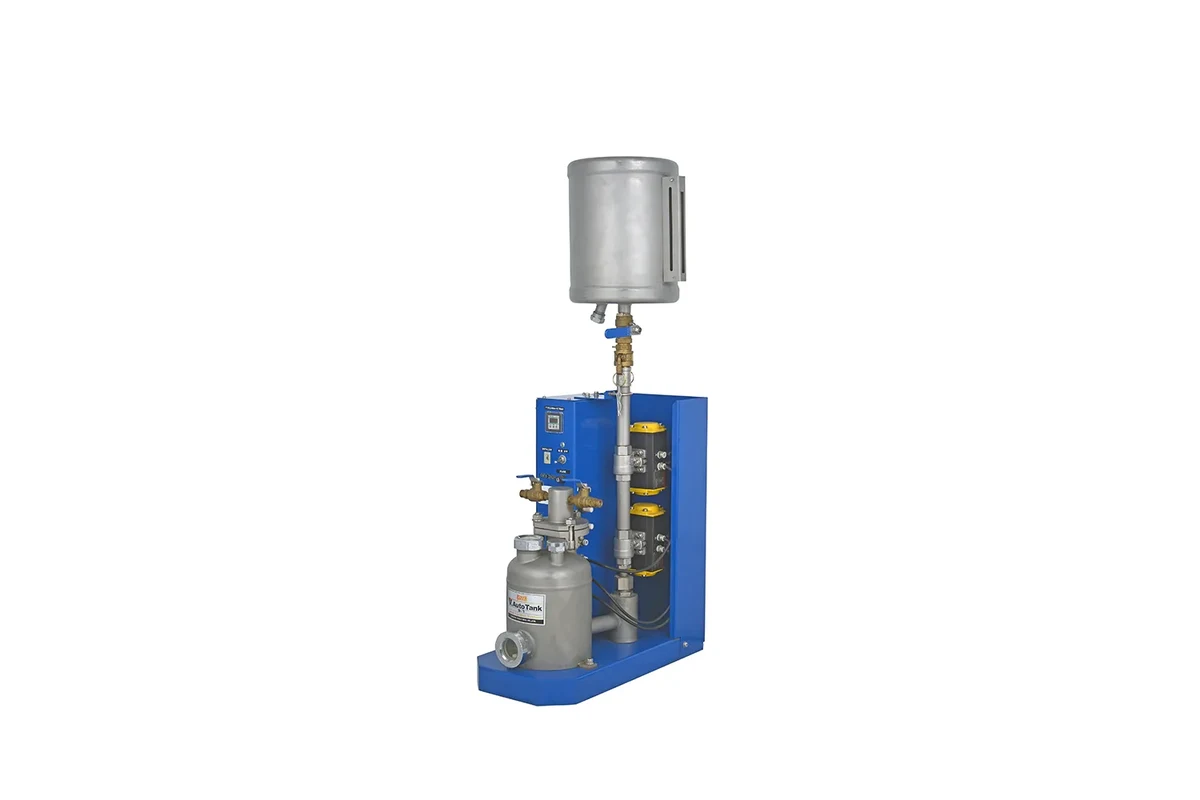
A flux generator is not one box. It is a small system, and each part has a job. The generator itself vaporizes the gaseous brazing flux and blends it into the fuel gas, replacing the traditional manual borax adding operation in flame brazing. The automatic liquid feeding device keeps the flux liquid level near the middle of the observation window, so the flux flow stays stable and brazing stays in its best working condition, and it cuts down the manual refilling work: it has a 10-litre liquid storage tank for long-term continuous supply, the feeding speed can be adjusted with DIP switches to match the actual consumption rate, and a high-performance pneumatic ball valve controls the feed safely — it monitors compressed air pressure in real time and stops working once the air pressure is lower than 0.4 MPa. Both the generator and the tank are made of 304 stainless steel, which keeps the flux quality stable over long use.
The vaporizer is the part the flux passes through, and XINRUI makes it in two series: a stainless steel series (models XRHF-150A, XRHF-150B, XRHF-375B, XRHF-158M-B and XRHF-160D-C-B) and a carbon steel series (models XRHF-160B and XRHF-160C). The catalog lists liquid storage tanks of 4 litres, a maximum gas flow rate of 3 m³/h on the standard models and 15 m³/h on the high-flow XRHF-375B, an inlet pressure of 0.05–0.1 MPa, and 5/16-inch hose sockets on the inlet and outlet. Which model fits depends on the gas, the flow the line needs, and whether the work is manual or automatic — the catalog lists some models for manual brazing, some for automatic brazing, and the large-scale automatic XRHF-375B for high-flow lines. A digital thermostatic heater for the flux generator is part of the same system, and a flux filling station handles the refilling side: a 100-litre station in 304 stainless steel, with three liquid outlets so three storage tanks can be filled at the same time, high and low liquid level observation windows, an air vent valve on top, and an automatic stop when a tank is full, so filling does not overflow, splash or drip.
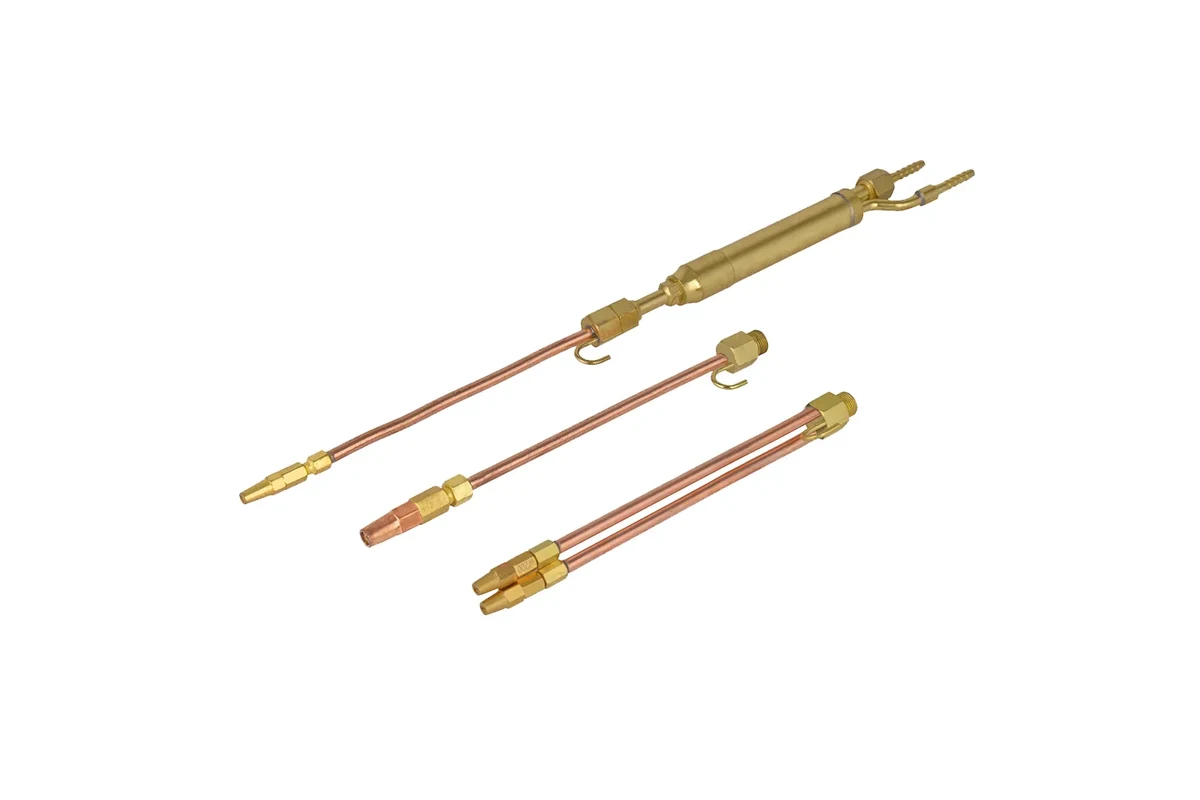
Two more parts sit between the gas supply and the torch. The FLOTRON (models DF-11K and DF-70) automatically stabilizes gas flow to keep the flame steady, which cuts the defect rate and raises the brazing qualification rate; it supports strong and weak flame switching, with the weak flame running at 1/4 to 1/6 of the strong flame flow, so switching to weak flame during waiting periods cuts oxygen and gas consumption; and if the line shuts down or the power fails, including a sudden blackout, the DF-11K automatically activates a nitrogen fire extinguishing device to put out the fire and prevent backfire. The torch at the end of the line is a valveless brazing torch, in single-head and double-head versions (M6/M8): a lightweight torch that reduces working fatigue, matched for use with regulating valves.
Vapor flux vs paste and powder: when each one wins
The honest comparison starts with what vapor flux is good at. In conventional powder or paste flux practice, glassy crystals and oxidation can form after brazing, so the workpiece often needs pickling. A vapor flux is intended to reduce that post-braze cleaning: the catalog says this flux will not produce glass crystals and is intended to avoid oxidation after brazing in the heated zone. On a line where the same joint repeats hundreds of times a shift, the generator also wins on consistency — the flux arrives with the gas, in the same amount, at every joint, and the operator never has to stop and reapply it. That is the case for copper and copper-alloy assemblies in HVAC, refrigeration and general tube work, together with a matching copper or silver filler metal.
But vapor flux is not a drop-in replacement for every paste or powder flux, and the limits matter. Trimethyl borate (methyl borate) vapor fluxes are a known industrial method for flame brazing of copper and copper-alloy assemblies; they are not an aluminum halide or fluoroaluminate furnace flux. If your work is aluminum flame brazing, use the FB2 halide aluminum flux or the fluoroaluminate flux instead. And a paste still has its place: a one-off joint, a repair, or a joint shape the flame cannot cover evenly may be better served by a paste brushed on by hand. The rule is to match the flux delivery to the joint, not to the equipment you happen to own.
What to check before you set one up
Four things decide whether a flux generator will work on your line, and all four are questions to answer before you buy, not after. First, the gas: the generator is specified for acetylene, liquefied gas, propane, or another gas specified for the unit — confirm which gas your line runs and that the model you choose is rated for it. Second, the flow: how many torches the generator has to feed, and the gas flow each one needs — the catalog’s standard models are rated at 3 m³/h and the high-flow model at 15 m³/h, so size the unit from the line, not from the price. Third, the tank: a 4-litre tank and a 10-litre tank feed a line for very different lengths of time, and the filling station is what keeps refilling from becoming the bottleneck. Fourth, the settings: exact generator settings and gas mixing ratios should come from the current datasheet and from trials on your parts — do not copy settings from a different brand of generator. The green flame is your visual check that flux is reaching the torch; if the flame is not green, the flux is not in the gas. One more thing to plan for: the flux is a flammable liquid — the drum carries the flammable label — so storage and handling follow the datasheet and local rules. XINRUI offers free samples, trial brazing, training and on-site support, with 24/7 technical support, and the company behind the equipment is certified to IATF 16949, ISO 9001, ISO 14001 and ISO 45001. Send the joint, the base metals, the gas and the volume, and the generator and flux can be recommended from those, rather than from a price list.
FAQ for flame brazing operators
What does a flux generator actually do?
It vaporizes liquid trimethyl borate flux and mixes it as vapor into the fuel gas feeding the torch, so the flux reaches the joint through the flame instead of being brushed or sprinkled on every joint. Every joint on the line gets the same dose, and the operator never has to stop and reapply flux.
Why is the flame green?
When the flux-bearing gas reaches the torch, the flame typically shows a bright green color. Covering the joint with that green flame is intended to improve the wettability and fluidity of the filler metal, reduce pinholes, and improve joint strength. If the flame is not green, the flux is not in the gas.
Do I still need to pickle parts after brazing?
Often not. Trimethyl borate vapor flux is a no-pickling flux: it will not produce glass crystals and is intended to avoid oxidation after brazing in the heated zone. Acid pickling can often be avoided when the process is set correctly — but the exact result depends on your parts and settings, so confirm it by trial.
Can I use vapor flux for aluminum brazing?
No. Trimethyl borate vapor flux is for copper and copper-alloy assemblies in flame brazing. For aluminum flame brazing, use the FB2 halide aluminum flux or the fluoroaluminate flux instead. Vapor flux is not a drop-in replacement for every paste or powder flux.
What should I check before buying a flux generator?
Four things: the gas your line runs (acetylene, liquefied gas, propane, or the gas specified for the unit), the flow rate against the number of torches, the tank capacity against your shift, and the settings — which should come from the current datasheet and trials on your parts, never copied from a different brand of generator.
A flux generator is a small piece of equipment with a large effect on a brazing line: it takes flux application out of the operator’s hands and puts it in the gas, where it is the same on every joint. If your line brazes copper and copper-alloy assemblies in volume and you are still brushing paste on every joint, the generator is worth a trial. If your work is aluminum, or one-off repairs, it is not — and the right answer is the flux that fits the joint. See the trimethyl borate flux page for the flux itself, or contact XINRUI to request the datasheet and a trial on your own parts.